
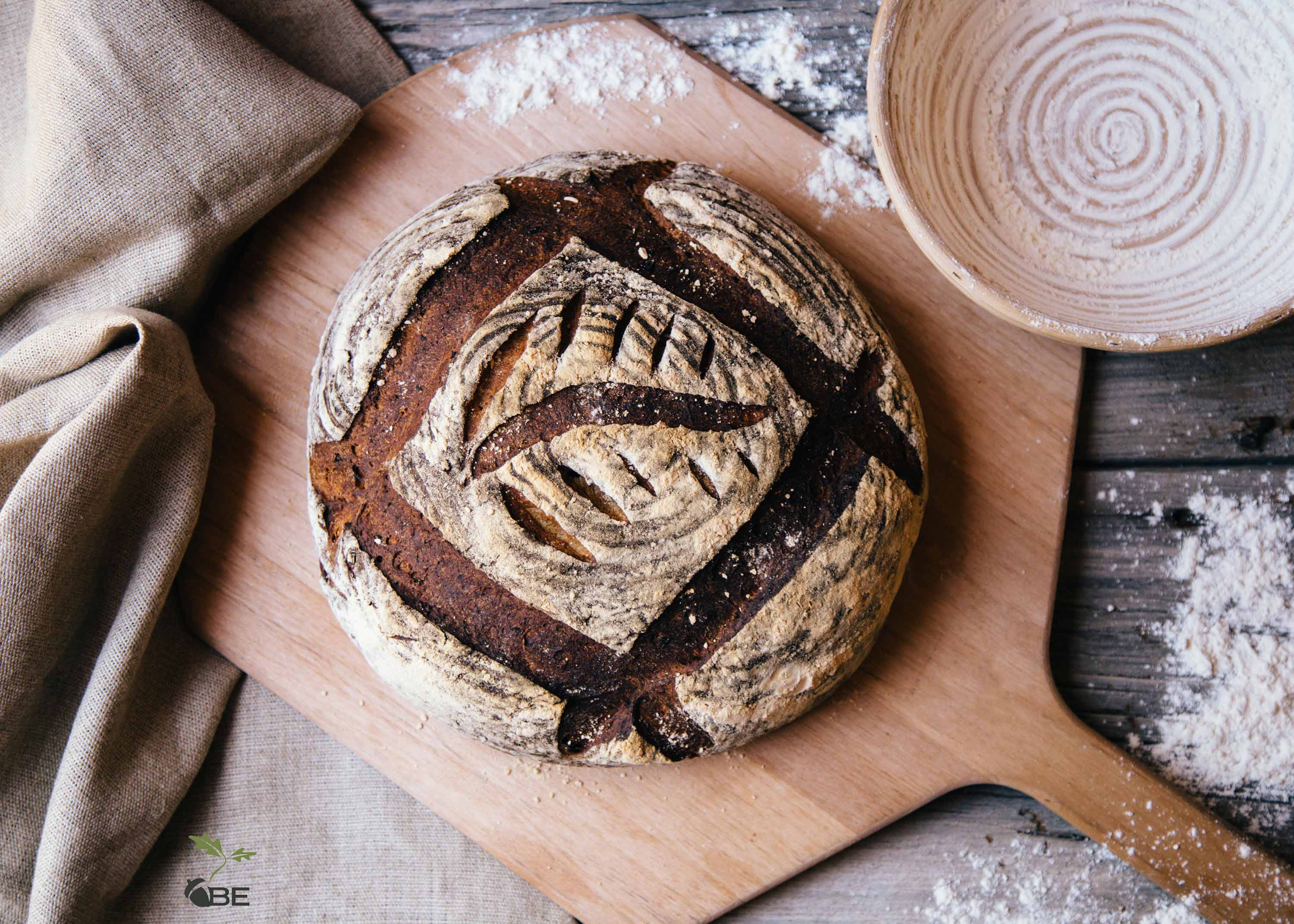
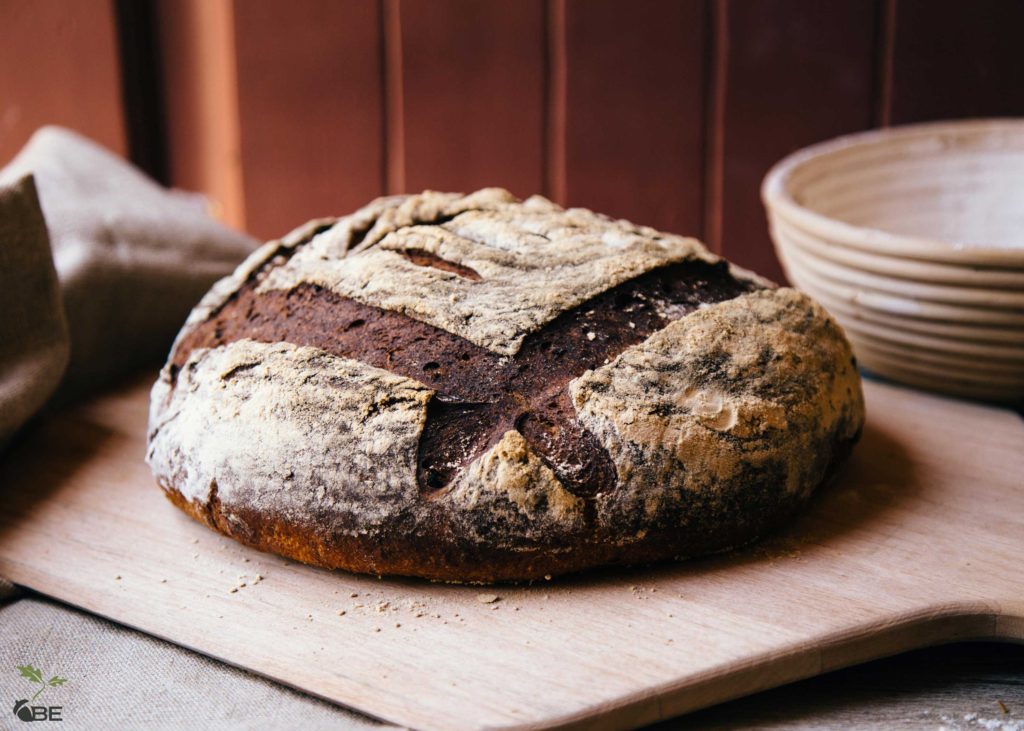
The raisins and molasses mixed with rye and wheat flours bring a sweet earthiness to this rustic hearth bread.
Ingredients
The Soaker
1 heaping cup dark raisins
3 cups boiling water
½ cup molasses
½ cup corn syrup
¾ cup butter
1 cup rolled oats
1 tablespoon brown sugar
2 cups buttermilk
The Dough
3½ tablespoons yeast
2 teaspoons sugar
¾ cup warm water (105°F to 110°F)
3 cups wheat flour
2 cups rye flour
8½ cups bread flour
2 tablespoons plus 2 teaspoons salt
2 cups cubed ice
Method
For the Soaker
In a food processor, purée the raisins. Add the boiling water, pulse slightly, then pour the mixture into the bottom of a large mixing bowl. Stir in molasses, corn syrup, butter, oatmeal, brown sugar, and buttermilk. Allow the mixture to sit and cool for 30 minutes to 1 hour to soften the grain, melt the butter, and enhance the flavor.
For the Dough
In a separate small mixing bowl, combine the yeast, sugar, and warm water. Allow the mixture in the small bowl to proof and become frothy. Incorporate the proofed yeast into the molasses mixture in the large bowl; stir together.
In another mixing bowl, combine the wheat flour, rye flour, and 8 cups of the bread flour with the salt. Add the dry ingredients to the wet ingredients in the large mixing bowl and stir to form a moderately stiff dough. Turn the dough out onto a floured surface and knead in an additional ½ cup bread flour. The dough should become stiff yet smooth and elastic. Transfer the dough to a lightly oiled bowl. Turn once to coat the top. Cover the bowl and let the dough bulk ferment until doubled in size, about 1 to 2 hours.
Preheat the oven to 450°F. Place a large pizza stone during preheating.
Degas the dough, then turn it out of the bowl onto a flat surface. Divide the dough into three 3-pound portions. Gently shape each portion into a boule by stretching the edges to the center to create a dome tension on the other side. Flip each round over onto the flat surface. Use a dough scraper in your dominant hand and your opposite hand to guide the pushing and pulling motion clockwise or counterclockwise to tighten the skin without tearing the dough. After a few minutes, place each formed boule seam-side up in three separate floured banneton baskets. Let the boules rise lightly covered for 30 to 60 minutes in a warm area. Gently poke the surface of the rising dough. Unproofed dough will spring back quickly and needs more time to rise. Dough that springs back only slightly or retains the indent is well-proofed and ready to bake.
For cooler temperatures or for dough that has chilled in the refrigerator overnight, the dough may take 2 to 3 hours to fully rise at room temperature.
Turn the boules out of the banneton baskets onto a sheet of parchment. Using a lame, or a sharp serrated knife, score the domed tops of each proofed round with a decorative pattern. Create quick, clean cuts, about ¼ to ½ inch deep. Extra flour from the bannetons on top of the dough will define the patterns as the bread bakes.
Beyond making a beautiful design, scoring bread before baking provides a directional escape for the gas and steam responsible for oven rise, preventing the sides of the loaves from bursting unattractively and allowing the dough to expand to full volume. This guided rise and expansion retain shape, develop a perfect crust, create a lighter crumb, and form the aesthetic designs and dramatic ears that make artisan loaves visually appealing.
Place a sheet pan on the bottom rack of the oven. Immediately, remove the stone with oven mitts, transfer the bread loaves on the parchment paper to the stone, and return the stone with the bread to the oven. Toss the cubed ice onto the sheet pan, then close the oven door as quickly as possible to retain heat and begin trapping the steam. Bake the bread for 40 to 50 minutes without opening the oven.
Inserting an instant-read digital thermometer inconspicuously into the loaf (usually through the bottom) to measure the dough’s internal temperature provides the most reliable test for doneness. The ideal temperature of this baked yeast loaf registers 200°F. If you do not have a thermometer, remove the loaf from the pan with oven mitts, turn it upside down, and tap the bottom of the loaf, listening for a hollow thumping sound. Transfer the baked bread from the parchment to wire racks. Permit the boules to cool completely before slicing, about 3 or more hours for full flavor, texture, and structural development.
Recipe Created and Stylized by R. Shannon Mock
and Brontë E. Mock

©Be the Beautiful Life All Rights Reserved
